 Jigsaw
On Safari in Africa: The Big Five, the Great Migration and More
Lions, leopards, elephants, gorillas and lemurs: a guide to Africa’s most famous wildlife, the best places to see each animal and how a safari works.
The word safari comes from Swahili and simply means journey. Today it usually means a trip to watch wild animals in their natural home, and nowhere in the world offers more of them than Africa. This guide introduces the continent’s most famous animals and the places where you can see them, with a puzzle for each.
The Big Five
The term Big Five was first used by hunters for the five large animals that were the most dangerous to hunt on foot: the lion, the leopard, the elephant, the rhinoceros and the Cape buffalo. Today the name is used by wildlife watchers, and seeing all five on one trip is a dream for many visitors.
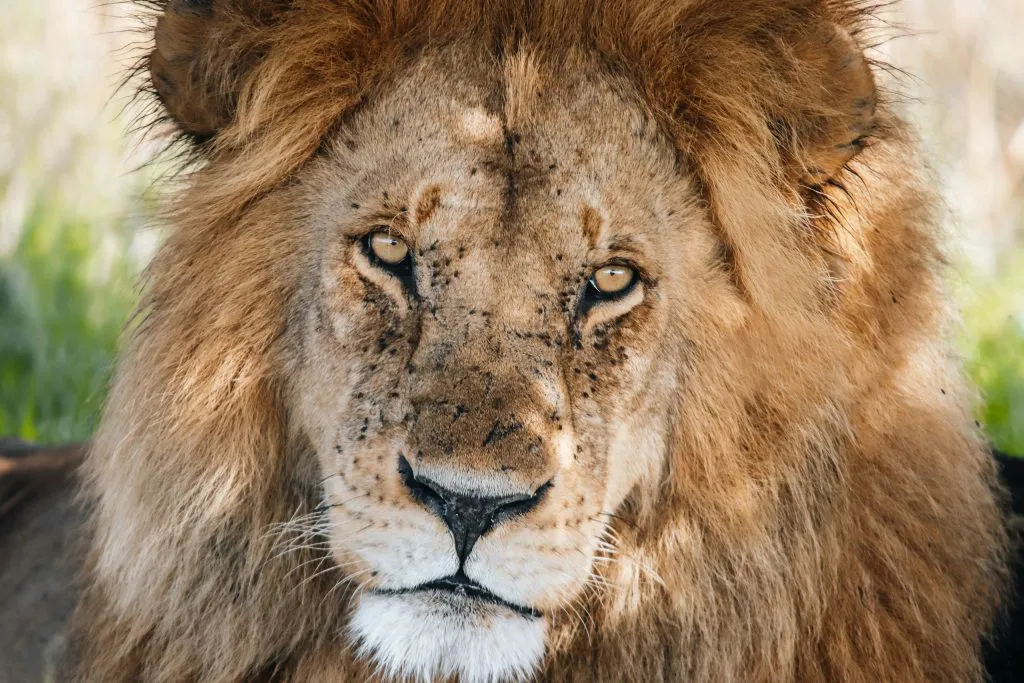
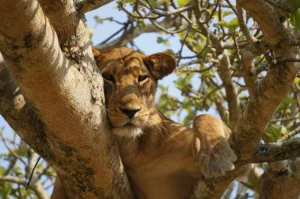
- Lion: the only cat that lives in groups, called prides. Lions spend much of the day resting and hunt mostly at dusk and at night. The Serengeti in Tanzania and the Maasai Mara in Kenya are among the best places to see them. In the Ishasha sector of Uganda’s Queen Elizabeth National Park, lions even climb trees and rest in the wide branches of big fig trees.
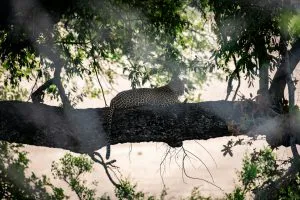
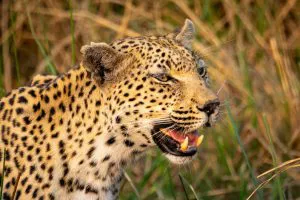
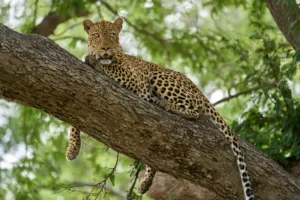
- Leopard: shy and solitary, the leopard is the hardest of the five to find. It often drags its prey up into a tree to keep it safe from lions and hyenas, and rests on the branches during the heat of the day. Botswana’s Moremi Game Reserve, the parks of South Africa and Zambia’s South Luangwa National Park, where the walking safari was born, are known for good sightings.
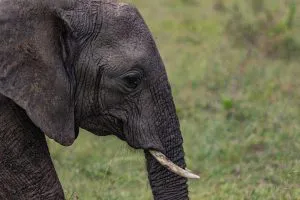
- Elephant: the largest land animal on Earth lives in family herds led by an older female, the matriarch. Botswana has the largest elephant population in the world.
- Rhinoceros: both black and white rhinos live in Africa. Poaching made them very rare, and today most live in carefully protected reserves.
- Cape buffalo: big, powerful and unpredictable, buffalo gather in herds of hundreds on the savanna.
The Great Migration
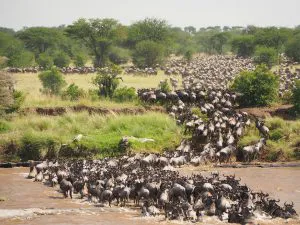
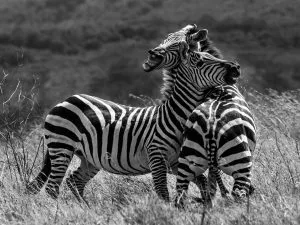
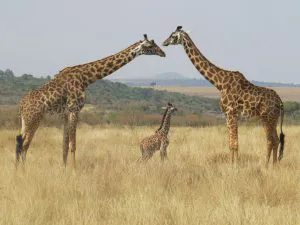
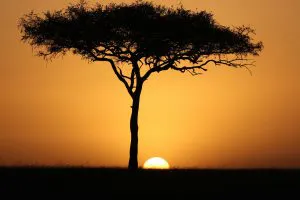
One of the greatest wildlife spectacles on the planet takes place every year in the Serengeti and the Maasai Mara. More than a million wildebeest, together with hundreds of thousands of zebras and gazelles, travel in a great circle following the rains and fresh grass. From about July to October, the herds cross the Mara River, where crocodiles wait in the water. Giraffes, which do not migrate, watch from among the acacia trees.
Gorillas in the mountains
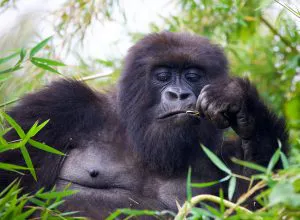
High in the misty forests where Rwanda, Uganda and the Democratic Republic of the Congo meet live the mountain gorillas. About half of them live in Bwindi Impenetrable National Park in Uganda, and the rest in the Virunga volcanoes. Visitors walk through the forest with rangers and spend one hour with a gorilla family. The number of permits is strictly limited, and the money from them helps to protect the gorillas, whose population has been slowly growing again.
Deltas, dunes and islands
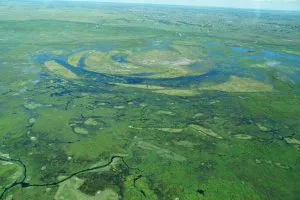
Safaris are not only about the savanna. In Botswana, the Okavango Delta floods each year in the dry season, and visitors explore its channels by wooden canoe, called a mokoro, among hippos, elephants and water lilies. In Namibia, giraffes and lions gather at the waterholes of Etosha, and meerkats stand guard at the entrances to their burrows in the Kalahari.
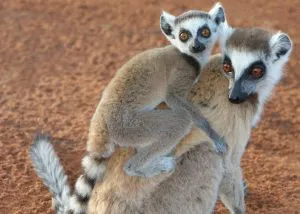
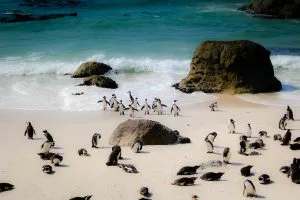
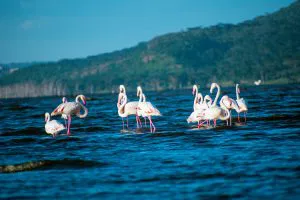
Some of Africa’s most remarkable animals live on its islands and coasts. Madagascar is the only home of the lemurs, such as the ring-tailed lemur that sunbathes with its arms spread wide. In South Africa, a colony of African penguins waddles among the granite boulders of Boulders Beach near Cape Town, and in Kenya’s Lake Nakuru, flocks of flamingos turn the shallow water pink.
How a safari works
Most safaris are made by vehicle, on game drives in the early morning and late afternoon, when animals are most active and the light is soft. Some parks also offer walking safaris with armed guides, boat trips or hot-air balloon flights over the plains. The dry season, roughly June to October in much of East and southern Africa, is often the easiest time to see animals, because they gather near rivers and waterholes and the grass is short.
A few simple rules make a safari safe and respectful: stay in the vehicle unless your guide says otherwise, keep your voice low, never feed the animals and give them plenty of space. The animals were there first, and the best sightings come to those who wait quietly. And if a trip to Africa is not possible right now, you can still meet every one of these animals in a jigsaw puzzle.