 Jigsaw
The Most Beautiful Places in Brazil
The most beautiful places in Brazil, region by region: Rio de Janeiro, Iguazu Falls, the Amazon, the Pantanal and Bonito, Salvador and Ouro Preto, the dunes of Lençóis Maranhenses and Jalapão, the beaches of the North-East and the canyons of the South, with the best time to visit.
Brazil is the largest country in South America, bigger than the whole of the European Union, and its 26 states and Federal District hold almost every kind of landscape: rainforest and wetlands, white dunes with blue lagoons, deep canyons, colonial towns and thousands of kilometres of beaches. Here are the most beautiful places in Brazil, region by region, with puzzles from each of them.
In short: the best places to visit in Brazil are Rio de Janeiro, Iguazu Falls, the Amazon around Manaus, the Pantanal and Bonito, Salvador and Ouro Preto, the Lençóis Maranhenses dunes, Fernando de Noronha and the beaches of the North-East, and the canyons of the South. For a first trip, Rio, Iguazu and either the Amazon or the Pantanal make a classic route.
Rio de Janeiro
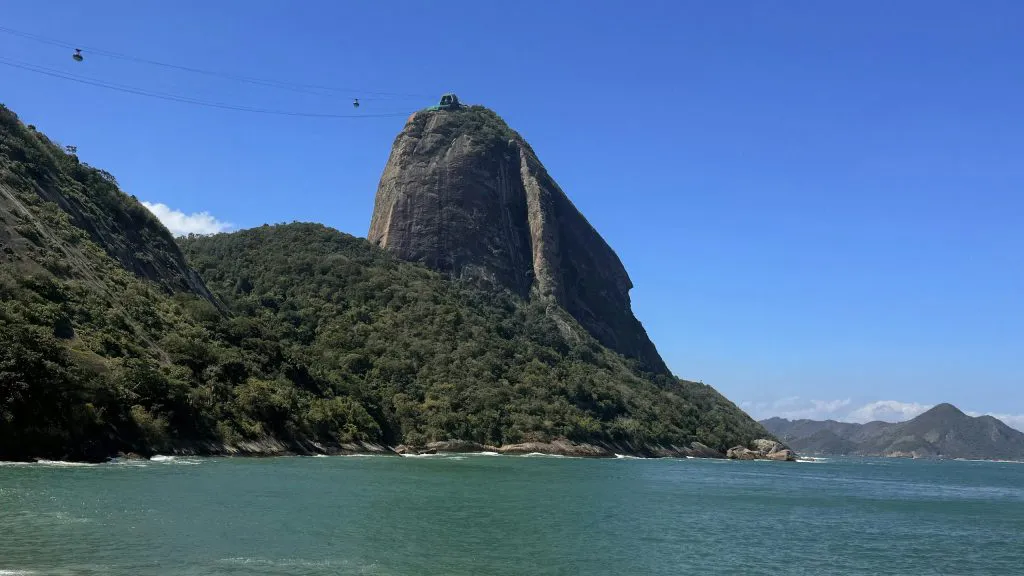
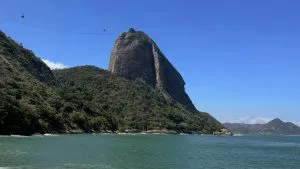
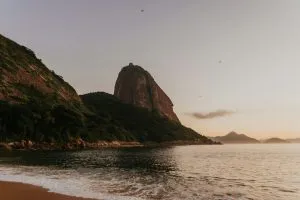
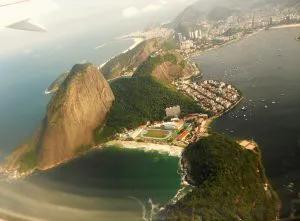
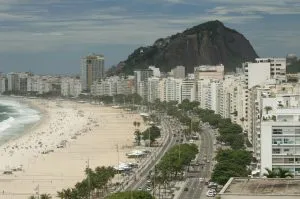
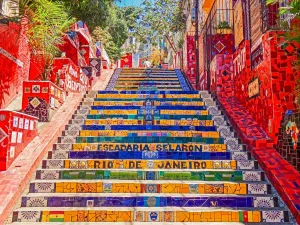
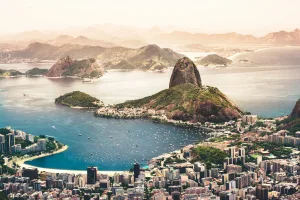
Few cities sit in such a setting as Rio, squeezed between forested mountains and the Atlantic. A cable car, first opened in 1912, climbs Sugarloaf Mountain for the view over Guanabara Bay, and Christ the Redeemer has stood on top of Corcovado since 1931. Below them lie the beaches of Copacabana and Ipanema and the Selarón Steps, covered by a Chilean artist with tiles from all over the world. Rio’s landscape between the mountains and the sea is a UNESCO World Heritage Site.
Iguazu Falls
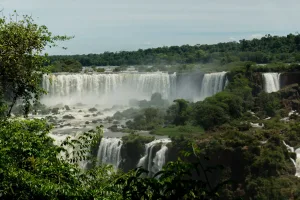
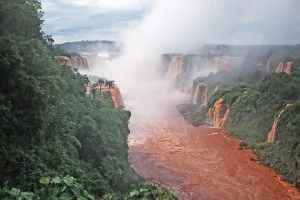
On the border with Argentina, the Iguazu River drops over a horseshoe of cliffs nearly three kilometres long, split into about 275 separate falls. The Brazilian side offers the best panorama, with a walkway that leads out towards the roaring Devil’s Throat. Iguaçu National Park, which protects the falls and the rainforest around them, has been a World Heritage Site since 1986.
The Amazon
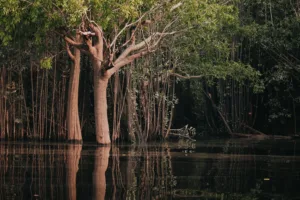
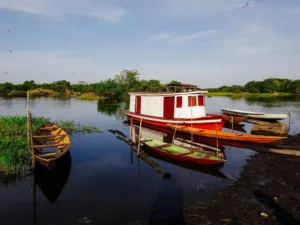
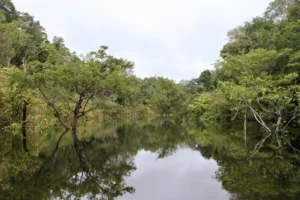
The Amazon is the largest rainforest on Earth, and most of it lies in Brazil. Manaus, a city in the middle of the forest, is the gateway: from there boats sail to the Meeting of the Waters, where the dark Rio Negro and the sandy Solimões flow side by side without mixing, and into the flooded forest, where the river rises up to ten metres in the rainy season. Further east, Belém on the river’s mouth has the busy Ver-o-Peso market.

The Pantanal and Bonito
The Pantanal is the world’s largest tropical wetland and one of the best places on Earth to see wild animals: capybaras, caimans, giant otters, hyacinth macaws and, along the rivers of the Encontro das Águas park, jaguars. Nearby, the little town of Bonito is famous for rivers so clear that visitors snorkel among the fish, for waterfalls and for flooded caves such as the Lagoa Misteriosa.


Salvador and Ouro Preto
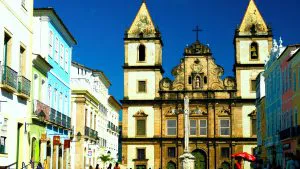
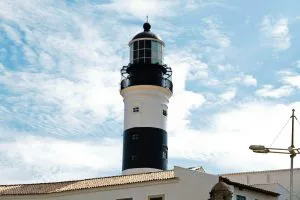
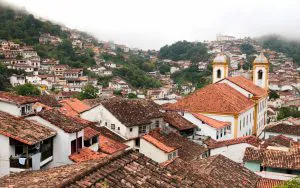
Salvador was the first capital of Brazil, from 1549 to 1763, and its old upper town, the Pelourinho, is full of colourful colonial houses and churches; the church of São Francisco is covered inside with carved gilded wood. In the mountains of Minas Gerais, Ouro Preto grew rich in the 18th-century gold rush, and its steep streets and Baroque churches, many decorated by the sculptor Aleijadinho, are a World Heritage Site.
Dunes and lagoons: Lençóis Maranhenses and Jalapão
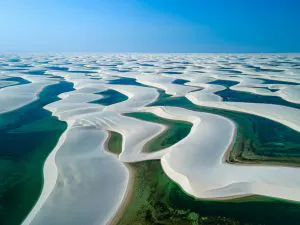
In Maranhão, white sand dunes stretch for dozens of kilometres along the coast, and from about June to September rainwater fills the hollows between them with blue and green lagoons. Inland, in Tocantins, the remote Jalapão has orange dunes below a long sandstone ridge, waterfalls and springs where the pressure of the water keeps swimmers afloat.


The beaches of the North-East
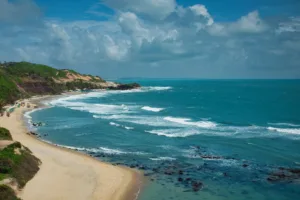
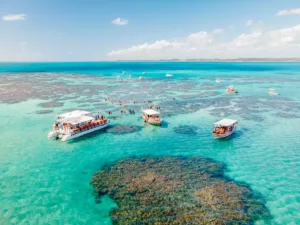
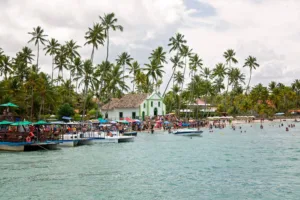
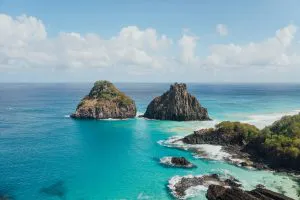
The North-East has Brazil’s most famous beaches. At Jericoacoara in Ceará, people climb a big dune to watch the sun set over the sea; at Canoa Quebrada, coloured cliffs rise above jangada sailing boats, and at Pipa, dolphins swim in the bays below the cliffs. Further south, João Pessoa stands near the easternmost point of the Americas, and at Maragogi and São Miguel dos Milagres coral reefs form warm natural pools at low tide. Out in the Atlantic, the islands of Fernando de Noronha are a protected marine park with some of the clearest water in the country.



The Cerrado and Brasília
The high plateau of central Brazil is the land of the cerrado, a savanna rich in plants found nowhere else. In Chapada dos Veadeiros, rivers fall over quartz cliffs into deep pools, and in Serra da Capivara in Piauí, a World Heritage Site, red sandstone walls hold thousands of rock paintings, some of them many thousands of years old. Brasília, built from scratch between 1956 and 1960 to be the new capital, is famous for the modern buildings of Oscar Niemeyer.


The South
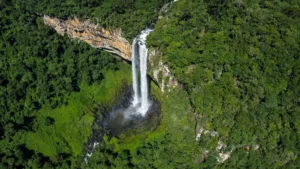
The South has a cooler climate and a different look, with pine forests, cattle farms and towns founded by German and Italian settlers, such as Blumenau with its timber-framed houses. Near Cambará do Sul, the canyons of the Aparados da Serra cut hundreds of metres deep into the plateau, the Caracol waterfall drops more than 130 metres into a wooded valley, and around Urubici, where frost and even snow are possible in winter, a stone arch called Pedra Furada crowns a mountain ridge.



Best time to visit Brazil
Brazil is so large that there is always a good region to visit. The North-East is sunny most of the year, the Pantanal is best in the dry season from June to October, when animals gather near the water, and the lagoons of Lençóis Maranhenses are fullest from June to September. Iguazu is impressive all year and at its fullest from December to March, while the South is mild in spring and autumn and cold in July and August.
Questions people often ask
What is the most beautiful place in Brazil?
Many travellers name Rio de Janeiro, for its mountains and beaches, or Iguazu Falls. For nature, the Lençóis Maranhenses dunes, Fernando de Noronha and the Pantanal are often called the most beautiful places in the country.
How many days do you need for Brazil?
Two weeks is enough for a classic first trip: four or five days in Rio, two at Iguazu and five or six in the Amazon or the Pantanal. Distances are huge, so most people fly between regions.
Can you visit Snake Island?
No. Ilha da Queimada Grande, off the coast of São Paulo, is home to the golden lancehead, a venomous snake found nowhere else, and the island is closed to visitors; only scientists with special permission may land there.
See Brazil in puzzles
You can explore every state in our Brazil puzzles, test yourself on the map, capitals, shapes and flags of the states in the Brazilian states quiz, or visit Rio and Iguazu on the Across the Americas journey.