 Jigsaw
The Most Beautiful Beaches of Hawaii, Island by Island
White, black and even red sand: a tour of Hawaii’s most beautiful beaches on Oʻahu, Maui, Kauaʻi and the Big Island, with a puzzle for each one.
Hawaii’s islands were built by volcanoes rising from the floor of the Pacific Ocean, and that fiery past gives its beaches an amazing variety. Within a short flight you can walk on soft white sand, black volcanic sand and even a beach of red cinders. Here is a tour of some of the most beautiful, island by island.
Oʻahu
Oʻahu is the most visited island and home to Honolulu, but its beaches range from busy city shores to quiet bays.
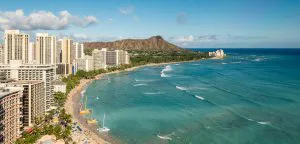
- Waikīkī Beach: Honolulu’s famous beach curves below the old volcanic crater of Diamond Head. Its gentle waves made it one of the places where modern surfing grew up, and beginners still take their first lessons here.
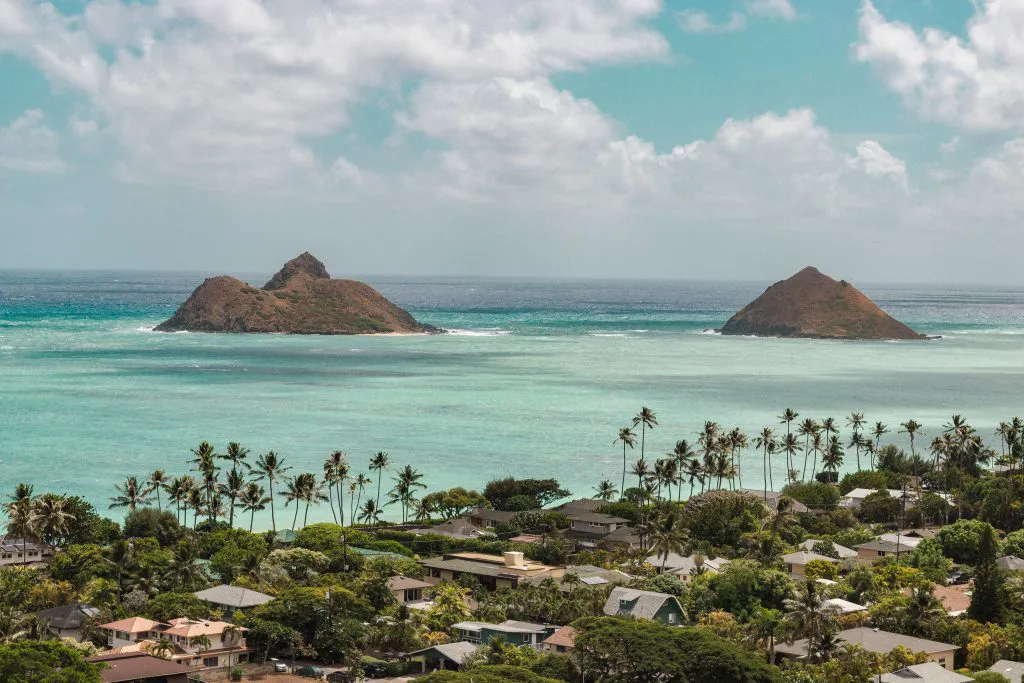
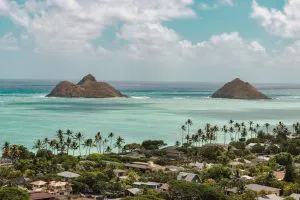
- Lanikai Beach: on the windward coast, this narrow strip of powdery sand faces calm turquoise water and the two Mokulua Islands. Its name means heavenly sea.
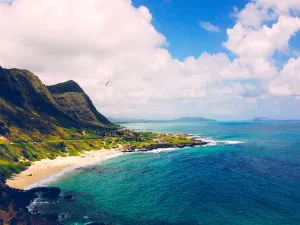
- Kailua and Waimānalo: nearby, Kailua Beach is a centre for kayaking and windsurfing, and Waimānalo is the island’s longest continuous white-sand beach, backed by the green cliffs of the Koʻolau Range.
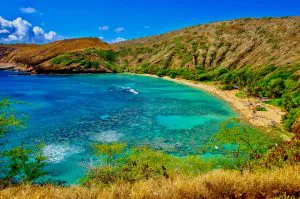
- Hanauma Bay: a curved bay inside an old volcanic crater, protected as a nature preserve and loved by snorkellers for its reef fish.
Maui
Maui, the second largest island, offers sunny west-coast beaches and wilder shores along the road to Hāna.
- Kapalua Beach: a golden crescent sheltered by two arms of lava rock, with calm, clear water ideal for swimming and snorkelling.
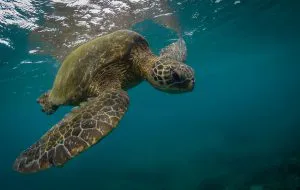
- Kaʻanapali: a long resort beach where green sea turtles often glide over the reef just offshore.
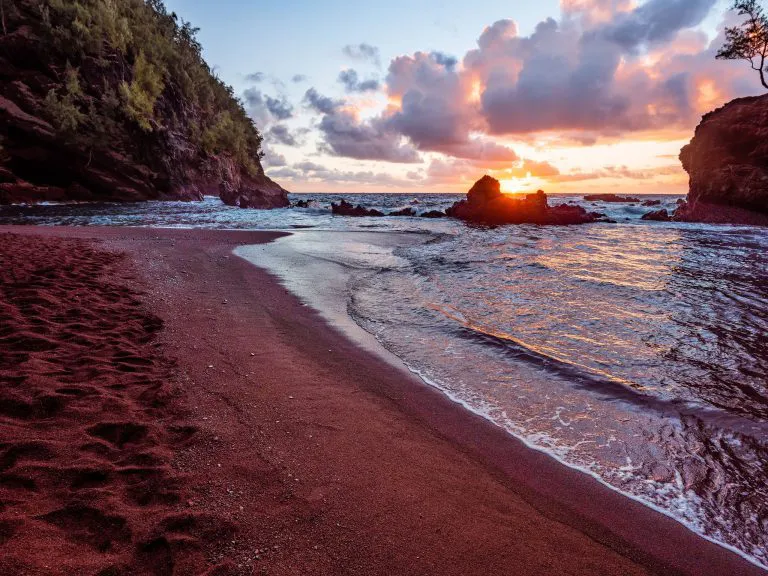
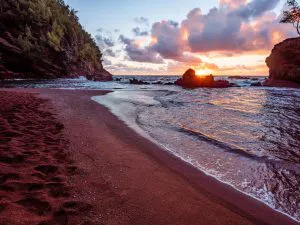
- Kaihalulu, the Red Sand Beach: near Hāna, a small cove whose deep red sand comes from an iron-rich cinder cone. A natural wall of lava keeps the water inside calm.
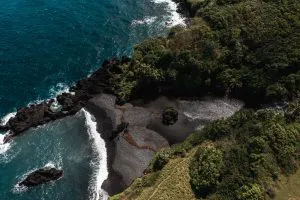
- Black sand near Hāna: on the rainy east coast, dark volcanic sand meets thick green forest, most famously at Waiʻānapanapa State Park.
Kauaʻi
Kauaʻi, the oldest of the main islands, is known as the garden isle for its deep green valleys.
- Hanalei Bay: a wide, curving bay framed by mountains and waterfalls, with a historic pier that is a favourite spot at sunset.
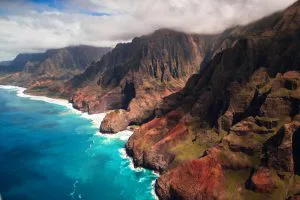
- The Nā Pali Coast: some of the most dramatic scenery in the Pacific, with cliffs rising more than a thousand metres above hidden beaches that can only be reached on foot, by boat or seen from the air.
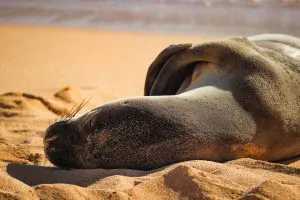
- Poʻipū: on the sunny south shore, where endangered Hawaiian monk seals sometimes haul out on the sand to rest.
Hawaiʻi, the Big Island
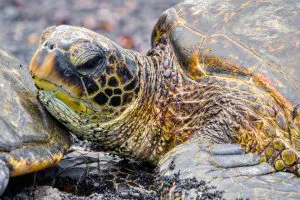
The Big Island is still growing, as lava from Kīlauea adds new land to its coast. Its beaches reflect this young, volcanic landscape: black sand beaches where green sea turtles bask in the sun, small bays of white sand hidden among black lava fields on the Kona Coast, and rocky shores where the historic place of refuge at Hōnaunau stands beside the sea.
Why is the sand different colours?
Most white sand in Hawaii is made of tiny pieces of coral and shells, much of it ground up by parrotfish as they feed on the reef. Black sand forms when hot lava meets the sea and shatters into fragments of dark volcanic glass. Red sand, like that of Kaihalulu, comes from iron-rich cinders that have rusted over time. Black and red sand beaches are young and rare, and taking sand home is not allowed, so they can be enjoyed by everyone.
Enjoy the beaches safely
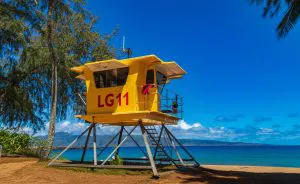
Hawaii’s ocean can be powerful, especially on north-facing shores in winter, when waves can be very large. Swim at beaches with lifeguards, watch the flags and ask about currents. Keep a respectful distance from turtles and monk seals, which are protected by law, and use reef-safe sunscreen to help protect the coral.