 Jigsaw
Black, Pink, Red and White: Why Beach Sand Comes in Different Colours
Sand is not always golden. Discover how volcanoes, coral, tiny sea creatures and even fish create the black, pink, red and dazzling white beaches of the world.
When we picture a beach, most of us imagine golden sand. But travel a little and you will find beaches that are black as coal, soft pink, deep red or so white they hurt your eyes in the sun. The colour of sand tells the story of where it came from. Here is what gives the world’s beaches their colours, with puzzles of some of the most beautiful examples.
Golden sand: pieces of old mountains
Most of the world’s sand, especially on continental coasts, is made mainly of quartz, one of the hardest and most common minerals in rocks such as granite. Over thousands of years, rivers and waves break down rocks into tiny grains and carry them to the sea. Traces of iron and other minerals give the grains their yellow, golden or brownish tones.
Dazzling white sand: silica and coral
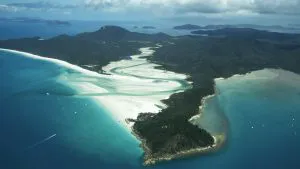
Some of the whitest sand on Earth is almost pure silica. Whitehaven Beach in Australia’s Whitsunday Islands is made of about 98 percent silica, so fine and pale that it stays cool underfoot even in the midday sun. At nearby Hill Inlet, the tide swirls it with turquoise water into ever-changing patterns.
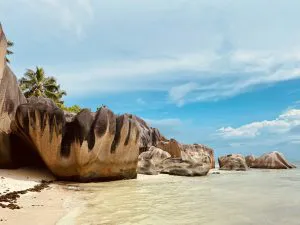
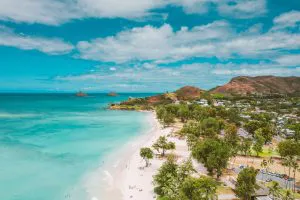
In the tropics, many white beaches have a very different origin: coral. Waves break up dead coral and shells, and a surprising amount of this sand comes from parrotfish. As they feed, they bite off pieces of coral, grind them with strong teeth in their throats and pass them out as fine white sand. A single large parrotfish can produce hundreds of kilograms of sand in a year.
Black sand: volcanoes meet the sea
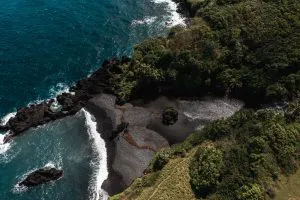
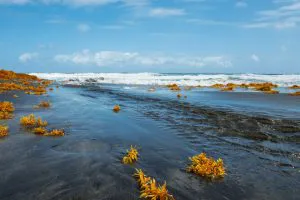
Black sand beaches are found on volcanic islands such as Hawaii, Iceland and Dominica. They form when hot lava flows into the ocean, cools suddenly and shatters into small pieces of dark volcanic glass and basalt, which the waves grind and wash ashore. Because this needs an active or recently active volcano, black sand beaches are often young, and some can disappear within decades if no new lava arrives.
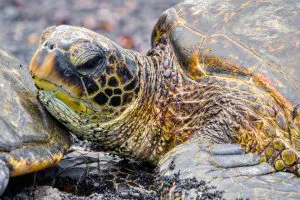
Black sand heats up quickly in the sun, which is one reason green sea turtles in Hawaii like to rest on it. On the rainy east coast of Maui and the black beaches of Dominica, the dark sand makes a striking contrast with bright green forest and white surf.
Red sand: rusted cinders
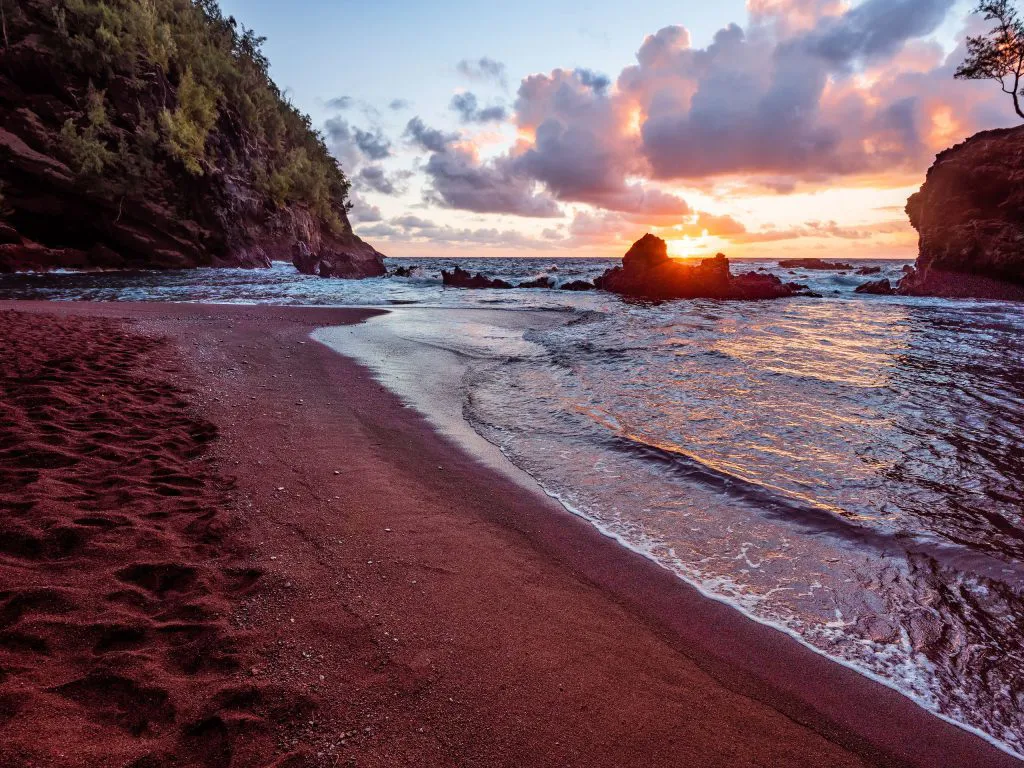
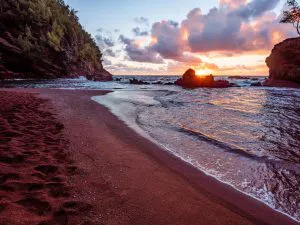
Red beaches are rare. Kaihalulu, the Red Sand Beach near Hāna on Maui, lies beside an old cinder cone rich in iron. As waves slowly wear away the cone, they carry its red cinders into the small cove below. The iron in them has oxidised over time, much like rust, giving the sand its deep red colour.
Pink sand: tiny red sea creatures
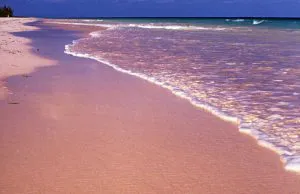
The soft pink sand of Harbour Island in the Bahamas and some beaches in Bermuda gets its colour from foraminifera, microscopic sea creatures with bright red or pink shells. They live on the undersides of reefs, and when they die their shells are broken up by the waves and mixed with white coral sand, giving the beach a gentle rosy glow that is strongest at the water’s edge.
Green sand: a gemstone beach
Even rarer are green beaches. Papakōlea Beach, at the southern tip of Hawaii’s Big Island, gets its olive-green colour from crystals of olivine, a mineral that forms in volcanic rock. Olivine is heavier than other volcanic grains, so the waves carry the lighter material away and leave the green crystals behind. When olivine is of gem quality, it is known as peridot.
Take only photos
Rare coloured sands are easily lost. In many places, including Hawaii, it is against the law to take sand from the beach, and visitors are asked not to take even a small bottle as a souvenir. The best way to take a black, pink or red beach home is in a photo, or in a jigsaw puzzle.