 Jigsaw
Viking Sites You Can Still Visit Today
The best Viking sites to visit in Denmark, Sweden, Norway, Iceland and the UK: Viking ship museums, ring fortresses, rune stones and burial mounds, from Jelling, Trelleborg and Roskilde to Birka, Uppsala, Lofoten, Þingvellir, Lindisfarne, York and Orkney.
For about three hundred years, the people of Scandinavia sailed out across the seas as raiders, traders and settlers, and the places they left behind can still be visited: royal burial mounds, ring fortresses laid out with perfect circles, fields of stones in the shape of ships, rune stones carved with the names of kings, and the open-air assembly where Iceland’s first parliament met. This guide travels through Denmark, Sweden, Norway and Iceland, and then follows the Vikings west to Britain, Ireland, Normandy, Greenland and North America.
In short: the best Viking sites to visit include Jelling in Denmark, with Harald Bluetooth’s rune stone; the ring fortresses of Trelleborg and Fyrkat; the stone ship graves of Lindholm Høje; the Viking Ship Museum in Roskilde; Ribe, Denmark’s oldest town; Birka and Gamla Uppsala in Sweden; the stone ships of Ales Stenar; the chieftain’s longhouse at Borg in Lofoten; Þingvellir in Iceland; Lindisfarne, York and the Norse islands of Orkney and Shetland in Britain; and L’Anse aux Meadows in Canada, the only known Viking settlement in America.
Who were the Vikings?
The Viking Age is usually dated from the raid on the monastery of Lindisfarne in England in 793 to the Battle of Stamford Bridge in 1066. The Vikings came from what is now Norway, Denmark and Sweden, and the word viking first meant a sea journey or raid rather than a people. Most Scandinavians of the time were farmers, fishermen and craftsmen, but their fast, shallow ships let some of them travel astonishing distances: west to Britain, Ireland, Iceland, Greenland and North America, and east along the rivers of today’s Russia and Ukraine to Constantinople and the markets of the Arab world.
Denmark
Jelling, the birth certificate of Denmark
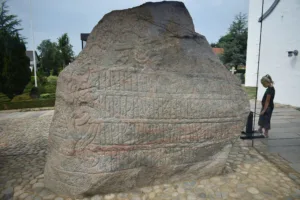
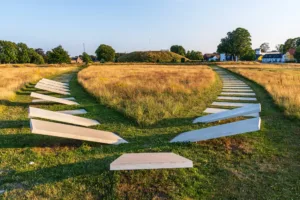
In the 10th century Jelling, in the middle of Jutland, was the seat of King Gorm the Old and his son Harald Bluetooth. Two great burial mounds stand beside a white church, and between them are the Jelling stones. The larger one, raised by Harald around 965, says that he won all of Denmark and Norway and made the Danes Christian, and it carries the oldest known picture of Christ in Scandinavia. Around the mounds, white markers show the outline of a huge stone ship, about 360 metres long. The wireless technology Bluetooth is named after Harald.
Trelleborg and Fyrkat, the ring fortresses
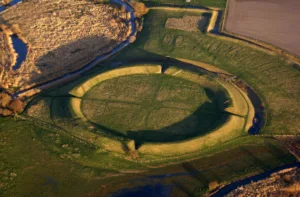
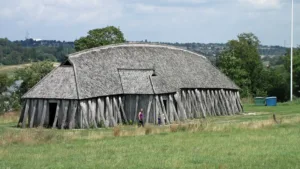
Around 980 Harald Bluetooth had a series of circular fortresses built across Denmark, each one laid out with remarkable precision: a round rampart, four gates facing the points of the compass and long halls arranged in squares inside. Trelleborg on Zealand is the best preserved, and at Fyrkat in northern Jutland you can walk into a full-size copy of one of the halls. Together the ring fortresses became a UNESCO World Heritage Site in 2023.
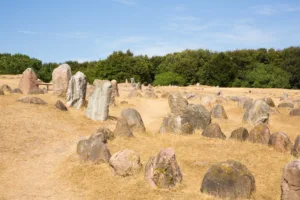
Lindholm Høje, a field of stone ships
On a hill above Aalborg, nearly 700 graves from the Iron Age and the Viking Age are marked by stones set out as ships, ovals and triangles. Drifting sand buried the hill around the year 1000 and kept the stones in place until archaeologists uncovered them in the 1950s, which is why the site looks almost as it did a thousand years ago.
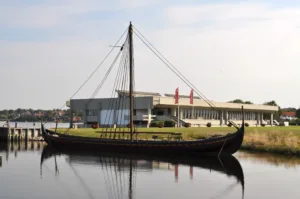
Roskilde and its Viking ships
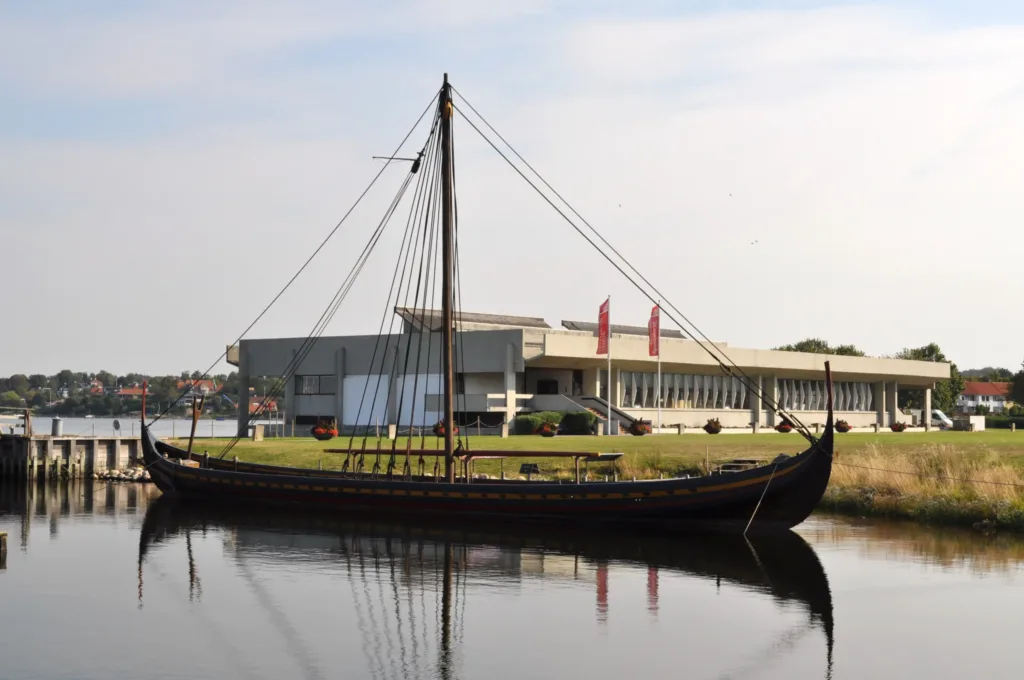
Around 1070 five ships were filled with stones and sunk in Roskilde Fjord to block the way to the town. Raised in 1962, they are now the heart of the Viking Ship Museum, where a boatyard builds copies with Viking tools. The largest copy, the Sea Stallion from Glendalough, is a 30-metre warship based on a wreck that had been built near Dublin, and in 2007 its crew sailed it all the way there.
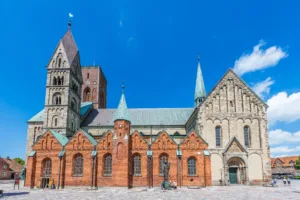
Ribe, Denmark’s oldest town
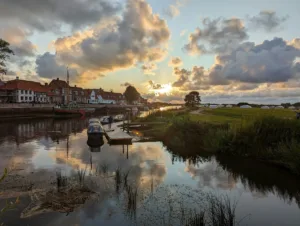
Ribe grew up as a Viking market place in the early 8th century, where traders sold amber, glass beads, combs and weapons, and the missionary Ansgar built one of the first churches in Scandinavia here around 860. Today its crooked streets, its cathedral and the Ribe Viking Centre outside the town make it one of the best places to imagine Viking-Age trade.
Sweden
Birka and Gamla Uppsala
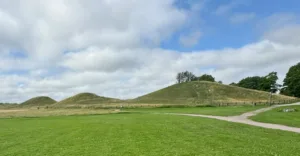
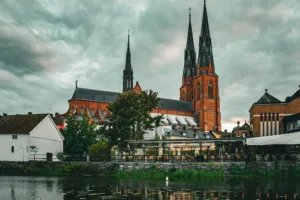
On the island of Björkö in Lake Mälaren, Birka was one of Sweden’s first towns and a busy trading place between about 750 and 975, where silver from the Arab world was exchanged for furs and iron. North of today’s Uppsala, the royal mounds of Gamla Uppsala were raised in the 6th century, before the Viking Age, and became the centre of the old Norse religion, with a famous temple described around 1070. When Sweden turned Christian, the church moved a few kilometres south to Uppsala, where the largest cathedral in Scandinavia now stands.
Stone ships: Ales Stenar and Anundshög
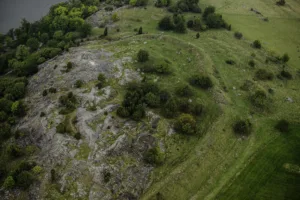
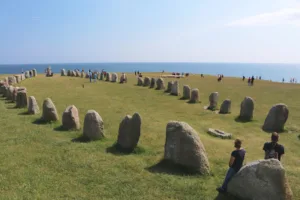
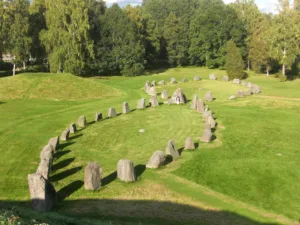
All over Scandinavia, graves were marked with stones in the shape of a ship. The most dramatic is Ales Stenar, where 59 boulders form a ship 67 metres long on a cliff above the Baltic near Ystad; it was probably raised about 1,400 years ago, just before the Viking Age. At Anundshög near Västerås, several stone ships lie beside the largest burial mound in Sweden.
Foteviken and Gotland
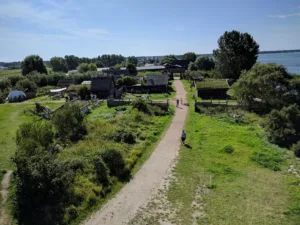
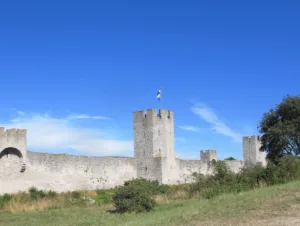
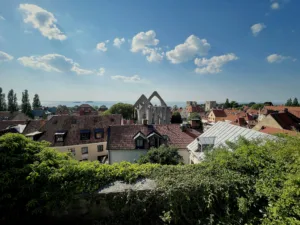
At Foteviken in Skåne, a whole Viking-Age town has been rebuilt with houses, workshops and a harbour, and craftspeople in Viking clothes work there in summer. Out in the Baltic, the island of Gotland was so rich in the Viking Age that more silver hoards have been found there than anywhere else in the world; its medieval town of Visby, with its walls and church ruins, is a World Heritage Site.
Norway
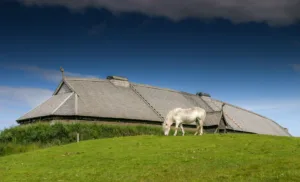
The chieftain’s hall at Borg, Lofoten
In 1981 a farmer ploughing his field at Borg in Lofoten struck the remains of the largest Viking building ever found, a chieftain’s longhouse about 83 metres long. A full-size copy now houses the Lofotr Viking Museum, where visitors eat at long tables and row a Viking ship.
Fjords, ships and the first towns
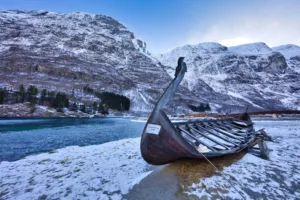
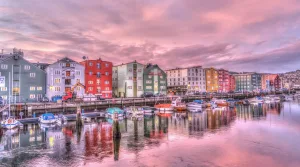
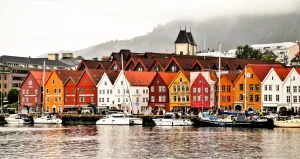
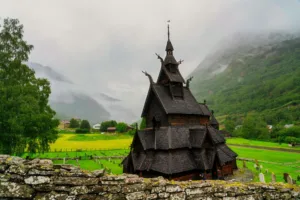
Norway’s great ship burials, such as those of Oseberg and Gokstad, show how beautifully Viking ships were built, with curved bows carved as dragons and snakes, and copies of them sail on the fjords today. Two of Norway’s oldest towns were founded by Viking-Age kings: Trondheim, founded by Olav Tryggvason in 997, and Bergen, founded around 1070, whose Bryggen wharf later became a trading post of the Hanseatic League. The wooden stave churches built after the Viking Age still carry carved dragon heads on their gables, like the prows of ships.
Iceland
Þingvellir, where the Althing met
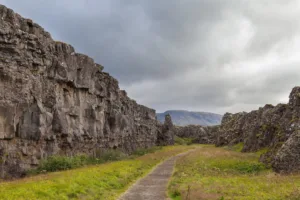
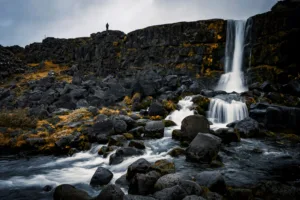
Norse settlers reached Iceland from the 870s, and in 930 they founded the Althing at Þingvellir, an open-air assembly often called one of the oldest parliaments in the world. Every summer people rode here from all over the island to hear the laws read from the Law Rock, and in the year 1000 the assembly decided that Iceland would become Christian. The site lies in a rift valley between the North American and Eurasian plates.
Turf farms and saga landscapes
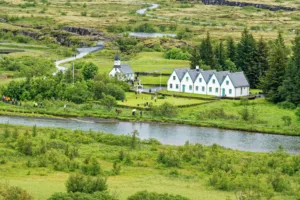
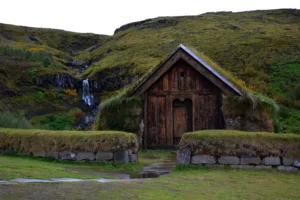
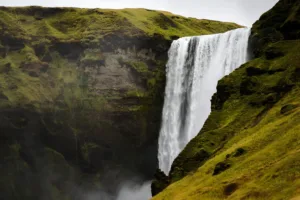
With few trees to build with, the first Icelanders lived in long houses with thick walls and roofs of turf. At Þjóðveldisbærinn, a farm of the Commonwealth period has been rebuilt from the ruins of Stöng, which was buried by an eruption of Hekla in 1104. The Icelandic sagas, written down in the 13th century, tie stories to places all over the island; one of them says that the settler Þrasi hid a chest of gold behind the waterfall of Skógafoss.
Beyond Scandinavia
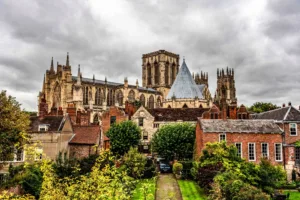
Lindisfarne and York
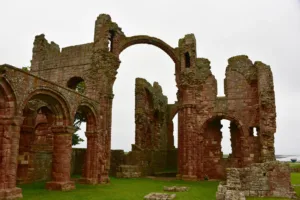
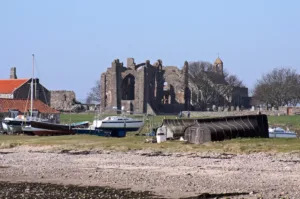
The Viking Age is said to have begun on Lindisfarne, the tidal Holy Island off Northumberland, when raiders attacked its monastery on 8 June 793. Seventy years later the raids turned into conquest: in 866 a great Viking army took York, which became Jorvik, the capital of a Viking kingdom, and Danish settlers ruled much of eastern England, the area later called the Danelaw. Excavations at Coppergate in York in the 1970s uncovered whole Viking streets, houses and even shoes.
Orkney and Shetland
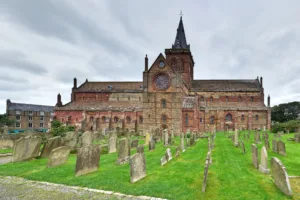
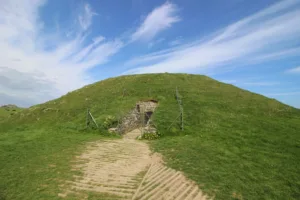
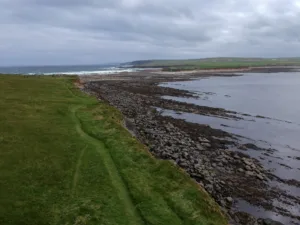
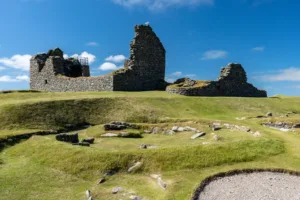
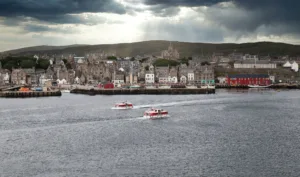
The islands north of Scotland were settled by Norwegians in the 9th century and stayed Norse until 1468 and 1469. In Orkney, Earl Rognvald began St Magnus Cathedral in Kirkwall in 1137, Norsemen carved runes inside the ancient tomb of Maeshowe, and the tidal island of Brough of Birsay keeps the foundations of Norse houses and a church. In Shetland, Jarlshof shows Norse longhouses among 4,000 years of ruins, and every January Lerwick burns a Viking galley at the Up Helly Aa fire festival.
Dublin and Normandy
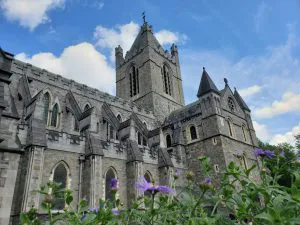
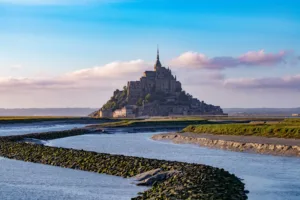
Vikings founded Dublin as a fortified base in 841, and for more than three centuries it was ruled by Norse kings, one of whom founded Christ Church Cathedral. In France, the Viking leader Rollo was given land around the mouth of the Seine in 911, and the region became Normandy, the land of the Northmen; his descendants built abbeys such as Mont-Saint-Michel, and in 1066 one of them, William the Conqueror, became king of England.
Greenland and North America
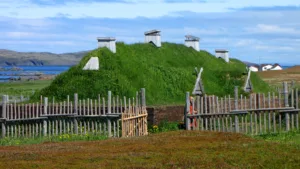
Around 985 Erik the Red led settlers from Iceland to the green fjords of south-west Greenland, and about the year 1000 his son Leif Erikson sailed on to a land he called Vinland. At L’Anse aux Meadows in Newfoundland, archaeologists found the remains of Norse houses, and tree rings show that wood there was cut in 1021, almost five hundred years before Columbus.
Questions people often ask
Where did the Vikings come from and where did they live?
The Vikings came from what is now Norway, Denmark and Sweden. Most of them lived on farms along the coasts and fjords, in long houses shared with their animals, and a few lived in trading towns such as Ribe, Birka, Hedeby and Kaupang. Later they settled in Iceland, Greenland, Orkney and Shetland, in parts of Britain and Ireland, and in Normandy.
Where did the Vikings land in England and North America?
The first recorded Viking raid on England struck the monastery of Lindisfarne in Northumberland in 793. In 865 a great Viking army landed in East Anglia and took York the following year. In North America, the only confirmed Viking site is L’Anse aux Meadows, at the northern tip of Newfoundland in Canada, where Norse sailors lived around the year 1000.
Did Vikings wear horned helmets?
No. No Viking helmet with horns has ever been found. The idea comes from the 19th century, when artists and the costume designers of Wagner’s operas gave horns to Norse warriors.
Were the Finns Vikings?
Not as a people. The Finns spoke a different, Finnic language and had their own culture, although they traded with the Norse, and Swedish Vikings passed along the Gulf of Finland on their way east.
Where can you see real Viking ships?
At the Viking Ship Museum in Roskilde, which shows five original ships and sails copies in the fjord, and in Oslo, home of the Oseberg and Gokstad ships, whose museum is closed while it is rebuilt as the Museum of the Viking Age, expected to open around 2027, so check before you go. Many museums, such as Foteviken and Lofotr, also have sailing copies.
Follow the Vikings in puzzles
Every place in this guide can be put together piece by piece. To travel them in order, from the royal mounds of Uppsala through Orkney, Lindisfarne and York to the Viking houses of Newfoundland, follow our journey In the Footsteps of the Vikings, or explore more puzzles of Denmark, Sweden, Norway and Iceland.