 Jigsaw
The Spookiest Castles and Places in the World
The spookiest places in the world for Halloween: Dracula’s castles in Transylvania, Scottish castles in the mist, Highgate Cemetery, the Crooked Forest, the Dark Hedges and the Initiation Well of Sintra, with the stories behind them.
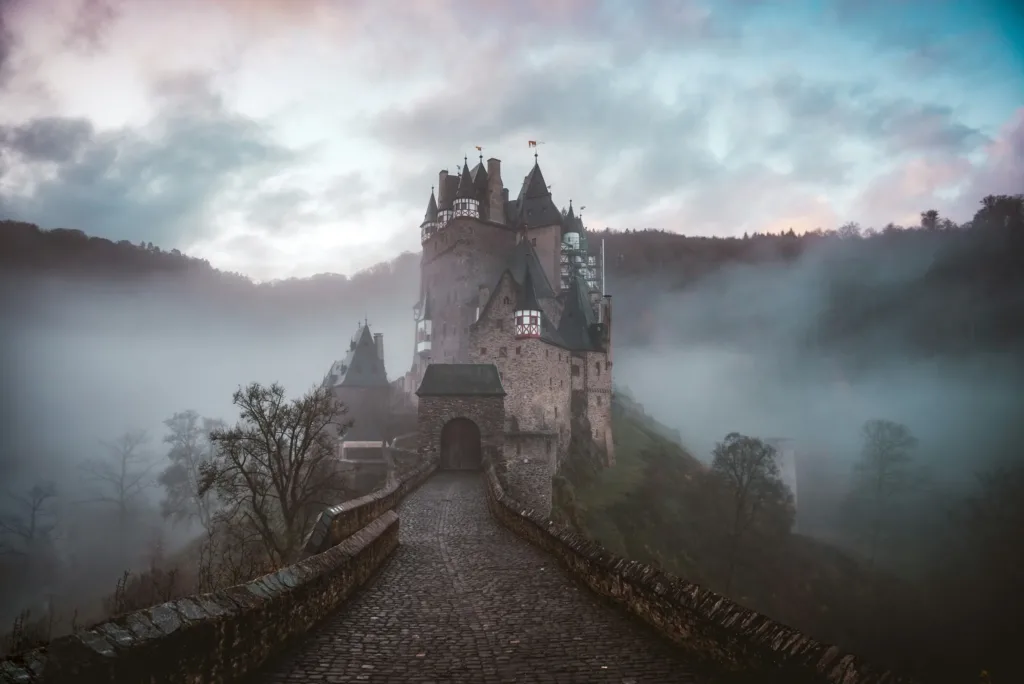
Some places seem made for Halloween: castles that rise out of the fog, ruins on the edge of the sea, cemeteries where ivy has swallowed the tombs and forests where the trees grow in shapes no one can explain. This guide visits the most atmospheric of them, tells the stories that people tell about them and shows each one in a jigsaw puzzle.
In short: among the spookiest places in the world are Bran and Corvin castles in Transylvania, linked with Dracula; Whitby Abbey in England, where Bram Stoker found the name; the misty castles of Scotland and the cliff-top ruins of Dunluce in Northern Ireland; Highgate Cemetery in London; the Crooked Forest in Poland, the Hoia-Baciu forest in Romania and the Dark Hedges in Northern Ireland; and the Initiation Well of Quinta da Regaleira in Portugal.
Castles with dark stories
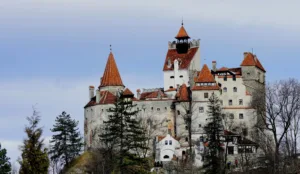
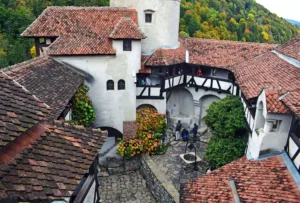
Bran Castle, Romania
Bran Castle guards a mountain pass between Transylvania and Wallachia, on a rock above the village of Bran. It is known around the world as Dracula’s Castle, although Bram Stoker never visited Romania and Vlad the Impaler, the 15th-century prince whose nickname inspired the name Dracula, has only a loose link with it. Its white towers and red roofs, rising above autumn forests, still look exactly like a vampire’s home.
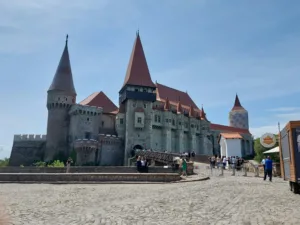
Corvin Castle, Romania
Corvin Castle in Hunedoara is one of the largest Gothic castles in Europe, reached by a long wooden bridge on tall stone pillars. A local legend says that Vlad the Impaler was once held prisoner here, though historians doubt it, and the castle has many other tales of ghosts and hidden treasure.
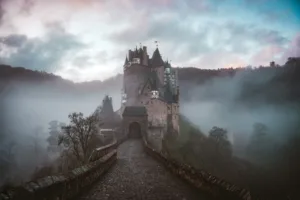
Burg Eltz and Hohenzollern, Germany
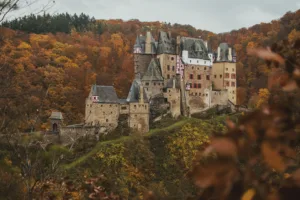
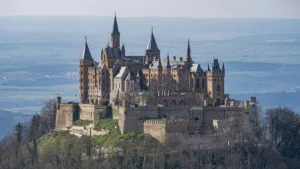
Burg Eltz, in a deep valley of the Moselle, has belonged to the same family for more than 850 years and was never destroyed; on autumn mornings it rises out of thick fog like a castle from a fairy tale. Hohenzollern Castle, the home of the family that gave Germany its emperors, crowns a lonely hill on the Swabian Alb and often seems to float above a sea of mist.
Castles of Scotland and Ireland
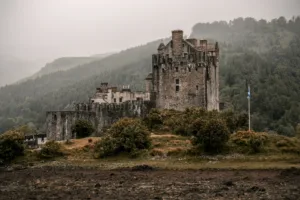
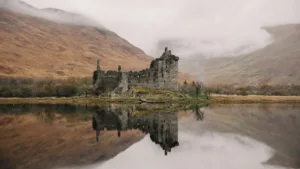
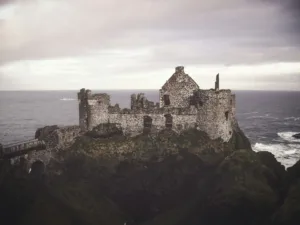
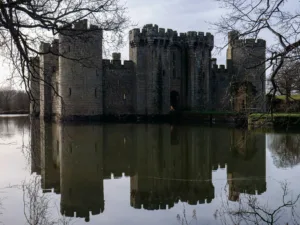
Eilean Donan was blown up in 1719 during a Jacobite rising and lay in ruins for two centuries before it was rebuilt. Kilchurn Castle on Loch Awe has stood roofless since the 18th century. On the north coast of Northern Ireland, Dunluce Castle clings to the edge of a cliff, and the story goes that one stormy night part of its kitchen fell into the sea. In England, the four round towers of Bodiam Castle rise straight out of their moat.
Whitby Abbey, England
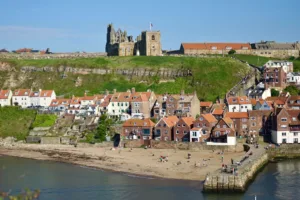
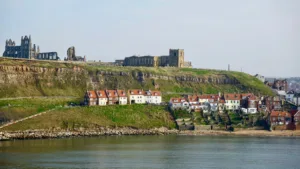
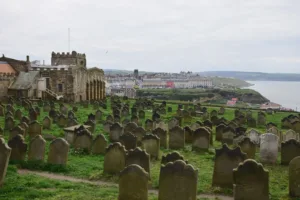
The ruined abbey on Whitby’s East Cliff, above the North Sea, is where Halloween and literature meet. Bram Stoker stayed in Whitby in 1890, found the name Dracula in a book in the town library, and set part of his novel here: the count comes ashore at Whitby in the shape of a large black dog, after his ship runs aground in a storm. The 199 steps from the old town lead up to St Mary’s churchyard, where wind-worn gravestones look out over the sea.
Old cemeteries
Highgate Cemetery, London
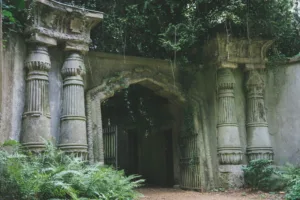
Opened in 1839, Highgate Cemetery is full of Victorian angels, family vaults and tombs half hidden by ivy. Its Egyptian Avenue, entered through a gateway with lotus columns, leads into a ring of vaults known as the Circle of Lebanon. The West Cemetery can be seen only on guided tours.
The cemeteries of Paris
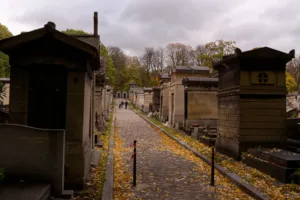
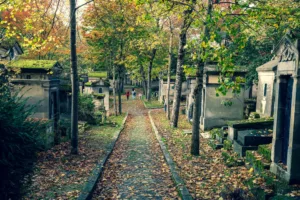
In the early 1800s Paris closed its overcrowded churchyards, moved the bones from many of them into the Catacombs and opened large cemeteries on the edge of the city. Their cobbled lanes, lined with small stone chapels and old trees, are especially beautiful in autumn, around All Saints’ Day, when families bring chrysanthemums to the graves.
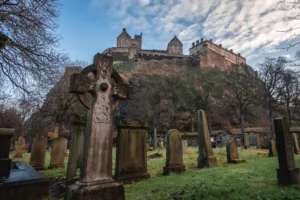
St Cuthbert’s Kirkyard, Edinburgh
Below the rock of Edinburgh Castle, St Cuthbert’s Kirkyard still has the watchtower built in 1827, when guards watched over the graves at night to stop body snatchers digging up the dead for the city’s medical schools.
Strange forests
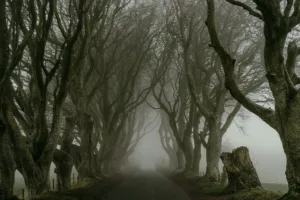
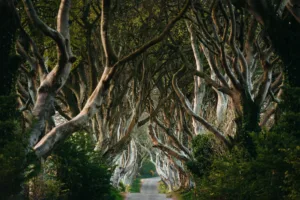
The Dark Hedges, Northern Ireland
The beech trees of the Dark Hedges were planted around 1775 along the road to a country house. Over two centuries their branches have grown into a twisting tunnel, and local people tell of a grey lady who walks beneath them at dusk. The avenue became world famous as the King’s Road in Game of Thrones.
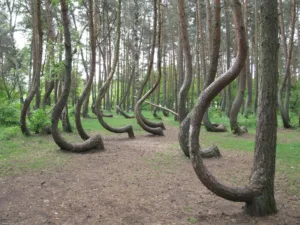
The Crooked Forest, Poland
Near the village of Nowe Czarnowo, about 400 pine trees planted around 1930 bend sharply sideways at the bottom of their trunks, almost all towards the north, before growing straight up. No one knows for sure why.
Hoia-Baciu, Romania, and Wistman’s Wood, England
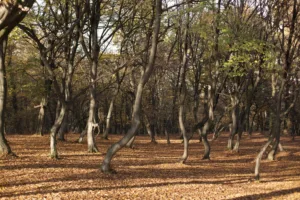
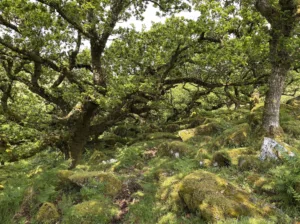
The Hoia-Baciu forest on the edge of Cluj-Napoca, with its oddly twisted trees and a round clearing where little grows, has been called one of the most mysterious forests in the world since a photo of a strange object over it appeared in 1968. On Dartmoor, the stunted oaks of Wistman’s Wood grow among moss-covered boulders, where legend says ghostly black hounds hunt at night.
Mysterious places
Quinta da Regaleira, Portugal
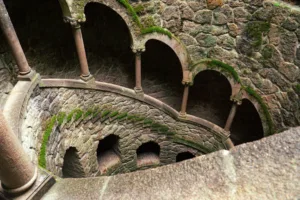
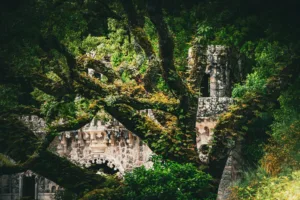
In the hills of Sintra, the gardens of Quinta da Regaleira hide towers, grottoes and dark tunnels. Their most famous secret is the Initiation Well, a spiral staircase that winds about 27 metres down into the earth, past nine landings often linked with the nine circles of Dante’s Inferno.
Fyrish Monument, Scotland, and the Witch House of Salem, USA
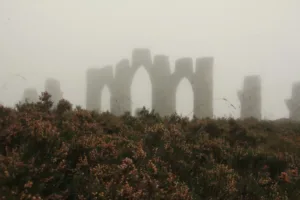
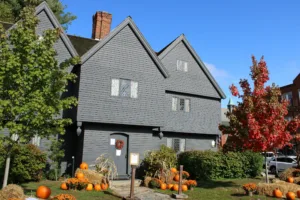
On a Highland hilltop, the arches of the Fyrish Monument, built in 1782, look like a ruined castle when the fog rolls in. Across the Atlantic, the Witch House in Salem, Massachusetts, was the home of Jonathan Corwin, a magistrate in the witchcraft trials of 1692, and is the only building in the town with direct links to the trials still standing.
Questions people often ask
Is Bran Castle really Dracula’s castle?
Not really. Bram Stoker never went to Romania, and Count Dracula’s castle in the novel is imaginary. Bran Castle became linked with the story because it looks the part and stands in Transylvania, where the novel begins.
Where did Halloween come from?
Halloween grew out of Samhain, the Celtic festival that marked the end of the harvest and the start of winter, when people in Ireland and Scotland believed the boundary with the world of the dead grew thin. Emigrants took the custom to North America, where carved turnips became carved pumpkins.
Can you visit these places?
Yes, all of them. Most castles are museums open to visitors, Highgate’s West Cemetery and the Initiation Well are best booked ahead, and the Crooked Forest, the Dark Hedges and Wistman’s Wood can be visited on foot at any time.
See the spookiest places in puzzles
Every place in this guide can be put together piece by piece. For more, open our Halloween puzzles, with pumpkin patches, harvest festivals and houses dressed up for 31 October.